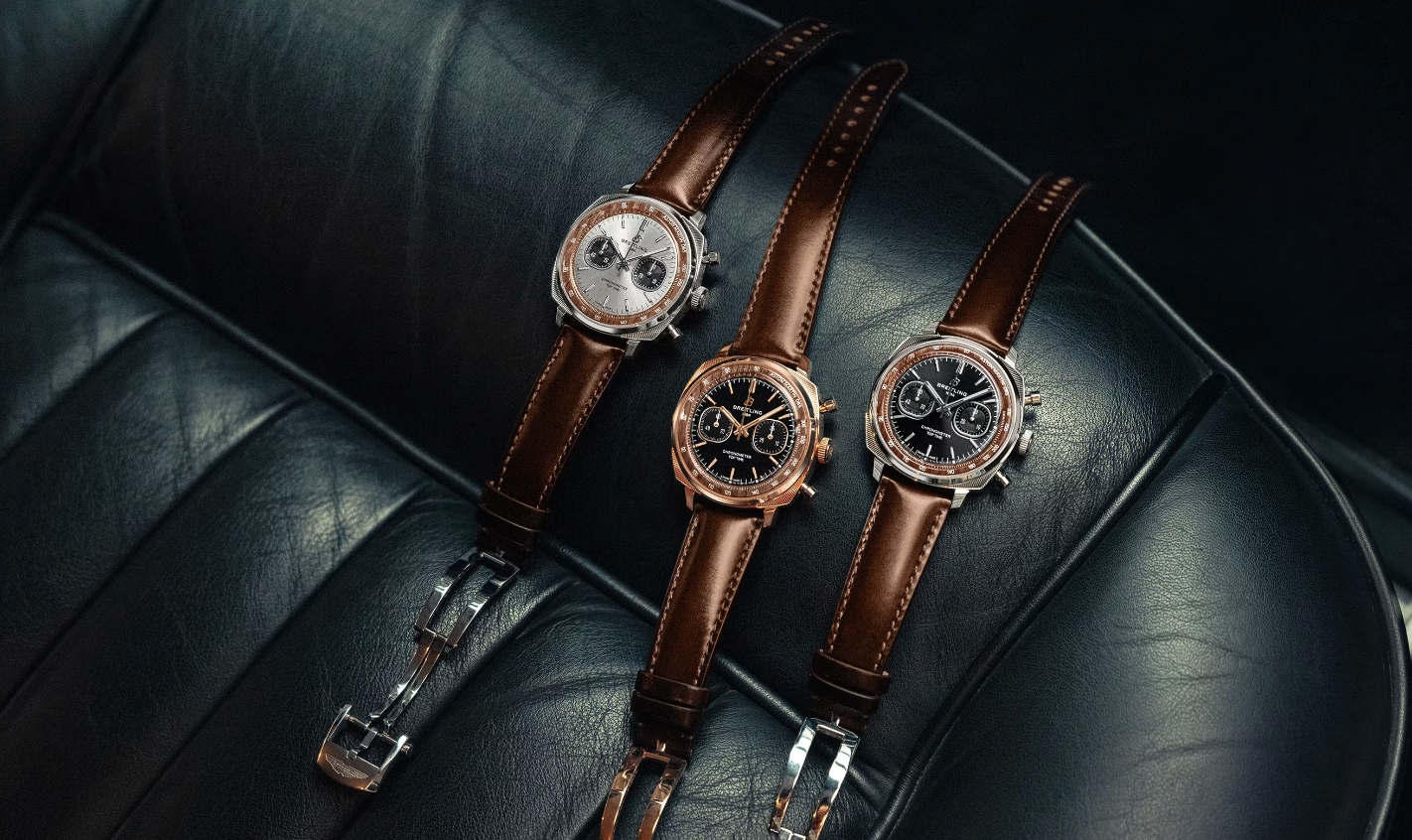
Some watch-and-car collaborations feel as though the logo came first and the story was filled in afterwards. The Breitling Top Time B01 Chronograph 41 Tribute to Aston Martin DB5 is rather different. There is already a genuine connection between the two names, and it goes back much further than the current partnership.
In 1965, a Breitling Top Time appeared on Sean Connery’s wrist in Thunderball, sharing the screen with the Aston Martin DB5. Nearly six decades later, Breitling has returned to that moment with three limited editions built around the same idea: take the character of the DB5 and express it through materials rather than simply adding another badge to the dial.
For anyone who follows Breitling replica watches, this is also an interesting release to study because its appeal depends heavily on small visual and material details. The case shape matters, but so do the dial surfaces, the wooden inner bezel, the contrast of the subdials and the way each version handles the DB5 theme.
The DB5 Connection Does Not Need Much Explaining
The Top Time began life in the 1960s as one of Breitling’s more youthful chronographs. It was not conceived as a formal watch. It belonged to an era of sports cars, changing tastes and a growing enthusiasm for watches that looked energetic rather than conservative.
The Aston Martin DB5 arrived at almost exactly the same cultural moment. Introduced in 1963 and made famous on screen shortly afterwards, the car became recognizable far beyond the world of serious motoring enthusiasts.
That shared history gives the new release an advantage. Breitling does not have to invent a complicated reason for bringing the names together. The association with Thunderball is already there, and the new watches are better when viewed as a reinterpretation of that period rather than as conventional branded merchandise.
The result is a Breitling Top Time B01 Aston Martin DB5 chronograph that feels noticeably more restrained than many motorsport watches. There are references to the car, but they are worked into the materials and proportions rather than printed everywhere.
One Watch, Three Very Different Personalities
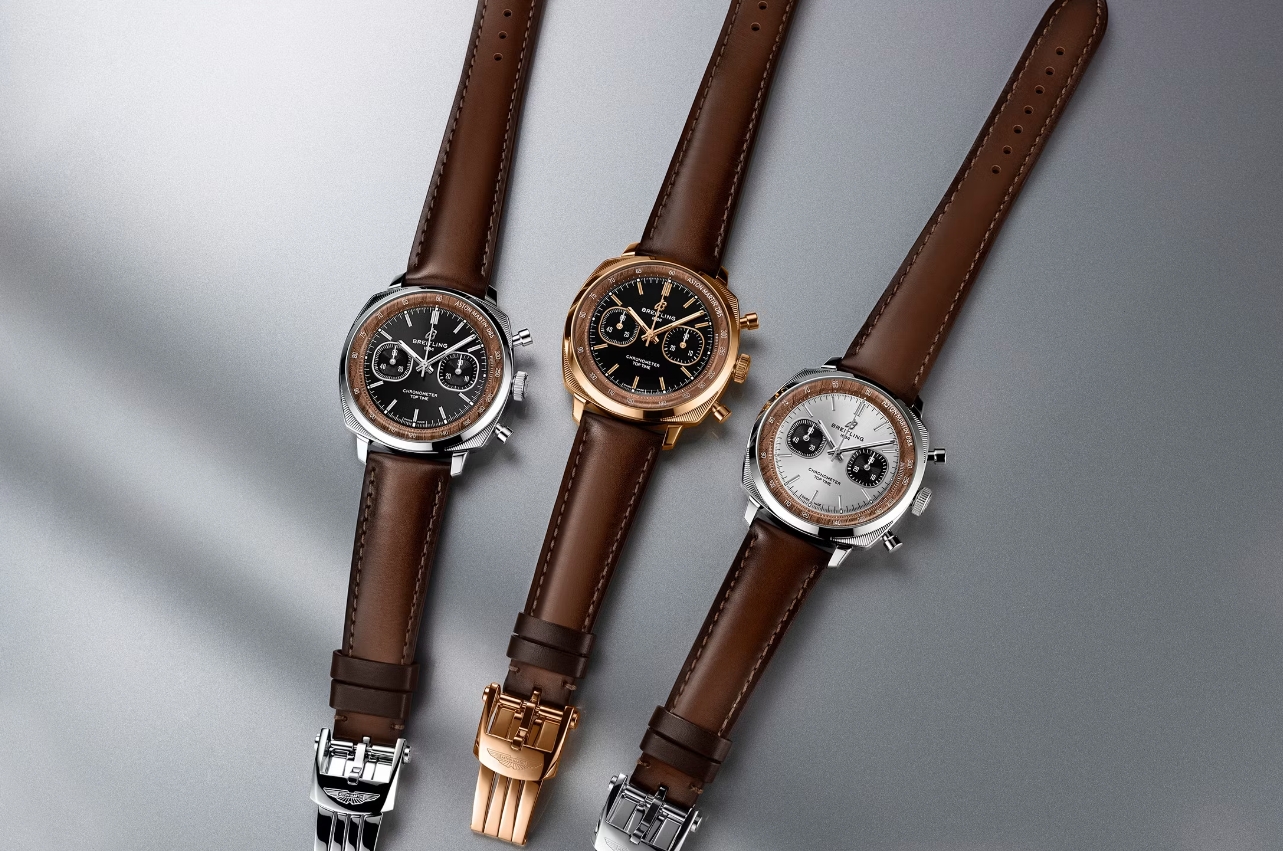
All three versions share the same basic idea, yet they do not feel like simple colour variations.
Stainless Steel and Silver Dial
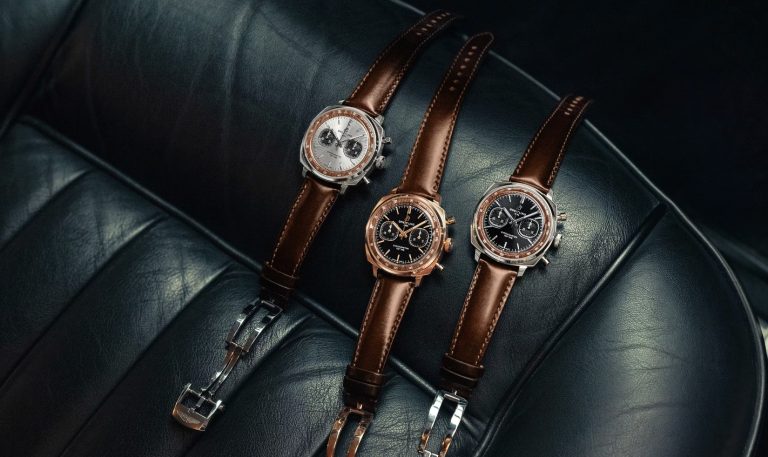
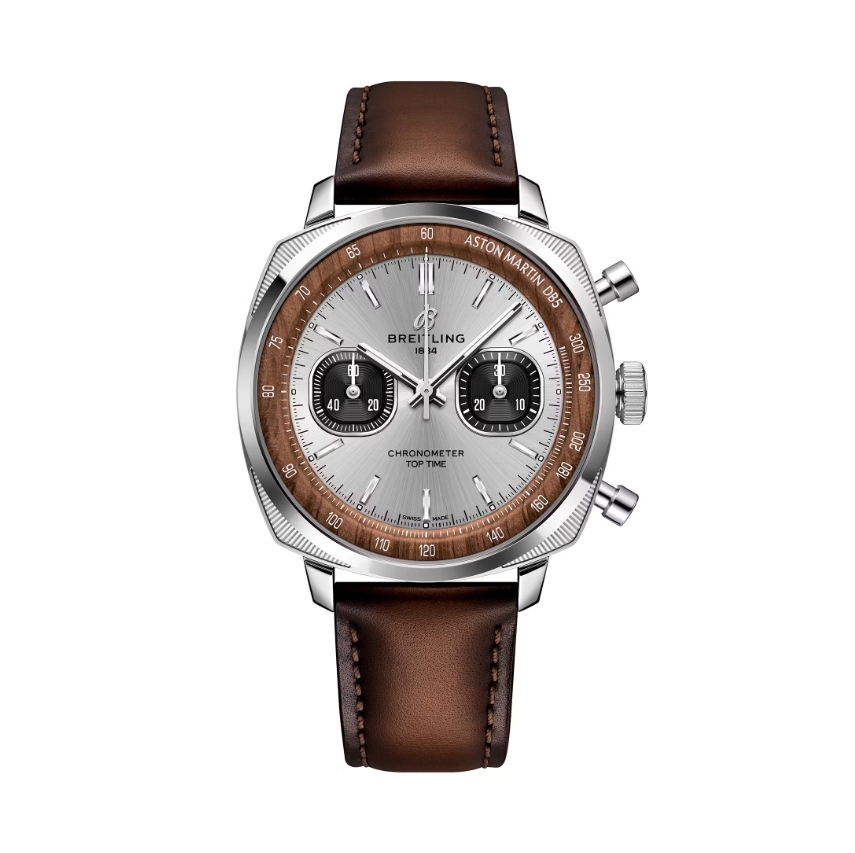
The stainless-steel reference AB0178121G1X1 is likely to be the easiest of the three to understand at first glance. Its silver-toned dial immediately calls to mind the DB5’s most familiar exterior finish, while dark subdials give the face the contrast expected from a traditional sporting chronograph.
More interesting is the wooden inner bezel surrounding the dial. Wood can easily become a novelty material on a watch, but here it makes sense. It refers to the hand-finished interior and steering wheel of the classic Aston rather than trying to imitate the exterior of the car.
This steel version is limited to 1,022 pieces. Among the trio, it is the one that most comfortably balances the watch’s automotive inspiration with everyday wearability.
Steel, Platinum and Black Lacquer
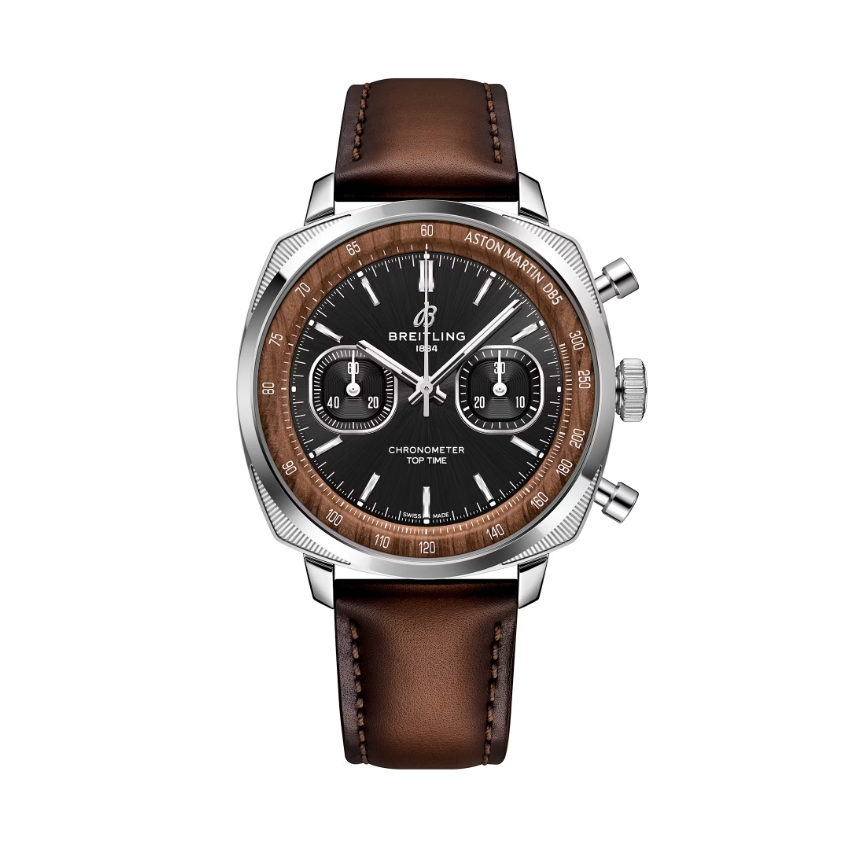
The middle version, reference PB0178121B1X1, changes the mood considerably. The case is stainless steel, but the fixed bezel is platinum, while the dial moves from silver to a deep black lacquered finish.
That combination gives the watch a more formal character. The wooden inner bezel remains, but it stands out more clearly against the darker dial. Rather than looking like a racing chronograph, this one feels closer to the cabin of a well-restored grand tourer.
Breitling limits this version to 315 examples. On paper, steel and platinum may sound like an unusual combination, but visually it is arguably the quietest of the three.
18K Red Gold and Onyx
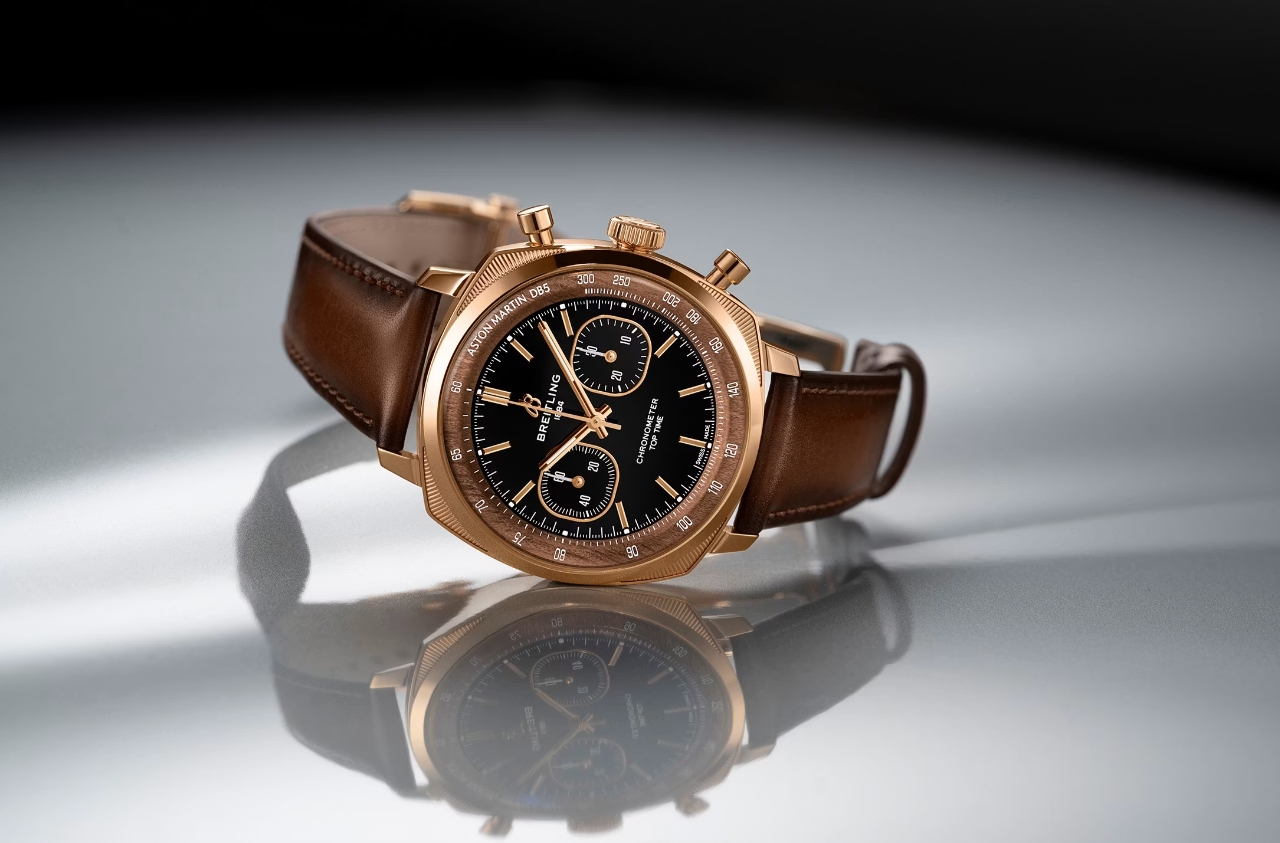
The final version is the most luxurious and the least subtle. Reference RB0178131B1X1 uses an 18K red-gold case together with a natural onyx dial.
What makes it interesting is that the dark stone is not being used merely to make the watch look expensive. The smooth depth of the onyx works with the wooden surround and red-gold case to evoke the polished surfaces of the DB5’s interior.
Only 250 examples of the red-gold and onyx Top Time are being produced. It is clearly the statement piece of the group, but it also shows how far the Top Time has travelled from its original image as a relatively youthful, accessible chronograph.
The 41mm Case Changes the Character
The DB5 edition uses a 41mm case, and the steel-and-platinum reference is listed at 13.3mm thick. That gives it considerably more presence than the smaller Top Time models that have appeared in recent years.
For me, this is one of the more interesting choices Breitling made.
A smaller case might have leaned harder into 1960s nostalgia. At 41mm, however, the watch feels deliberately modern. It is still vintage-inspired, but it does not try to behave like a vintage watch.
The cushion-like outline also gives the case more personality than a conventional round chronograph. Viewed from a distance, the watch still reads as a Top Time, but up close the shape works particularly well with the squared-off character of the subdials.
Anyone comparing a 41mm Breitling Top Time chronograph should therefore look beyond the diameter alone. Case thickness, lug shape and the way the leather strap drops from the case will have just as much influence on how large the watch feels on the wrist.
The Wooden Inner Bezel Is the Detail That Matters Most
If I had to choose one feature that defines the DB5 editions, it would not be the Aston Martin name. It would be the wood.
The wood-inlaid inner bezel on the Breitling Top Time adds a texture that is unusual in a modern sports chronograph. More importantly, it makes sense in relation to the car.
This is also the sort of element that deserves close attention when looking at different interpretations of the watch. Wood grain is naturally irregular. Colour, surface treatment, alignment and the transition between the wooden section and the dial can all make a large visual difference.
A photograph may make two watches appear almost identical. In person, details such as surface depth and finishing often reveal far more.
A Familiar Engine Underneath: Caliber B01
Inside the watch is Breitling’s Manufacture Caliber 01, an automatic chronograph movement that has become one of the foundations of the modern Breitling catalogue.
It is COSC-certified and offers approximately 70 hours of power reserve, which means the movement has enough reserve to make it through a typical weekend without being worn.
The movement is visible through the caseback, and Breitling has also changed the rotor finishing depending on the reference. The steel model uses a steel rotor, while the steel-and-platinum and red-gold editions use an 18K red-gold rotor. Aston Martin branding appears on the rotor rather than dominating the front of the watch.
That is a detail I prefer. A collaboration like this works better when the connection becomes something the owner discovers gradually rather than something the dial announces from several metres away.
Why the Dial Works Better Without a Date
Another decision worth keeping is the absence of a date window.
The Top Time already has a lot happening across its face: two subdials, a tachymeter scale, applied markers, contrasting surfaces and the unusual wooden surround. A date aperture would have introduced another visual interruption.
Without one, the dial remains reasonably balanced. The eye moves naturally between the two registers, and the wood becomes part of the overall composition rather than competing with an extra display.
It is a small choice, but it helps make this two-register Breitling motoring chronograph feel more coherent.
What Is Worth Looking at on Replica Interpretations?
Readers browsing our Breitling Top Time replica watches section will probably notice that this particular release creates a different challenge from a simpler steel sports watch.
The basic outline is only part of the story. The more revealing areas are likely to be the finishing and proportions.
On the dial, the relationship between the subdials and hour markers needs to look balanced. The typography around the tachymeter should remain clean rather than heavy. The silver dial should have the correct change in tone under light, while the black version depends on having a convincing lacquer-like depth.
The wooden inner bezel is even harder to judge from specifications. Grain, colour and surface finish will influence the appearance considerably. The red-gold version adds another variable because the case tone has to work convincingly alongside the black onyx-style dial and warm wood.
These are more useful things to examine than marketing labels such as “AAA,” “AAAAA” or “1:1.” Such terms do not provide a consistent technical standard. Visible construction, dimensions and finishing tell a reader far more about what is actually in front of them.
The Steel Version Makes the Strongest Case
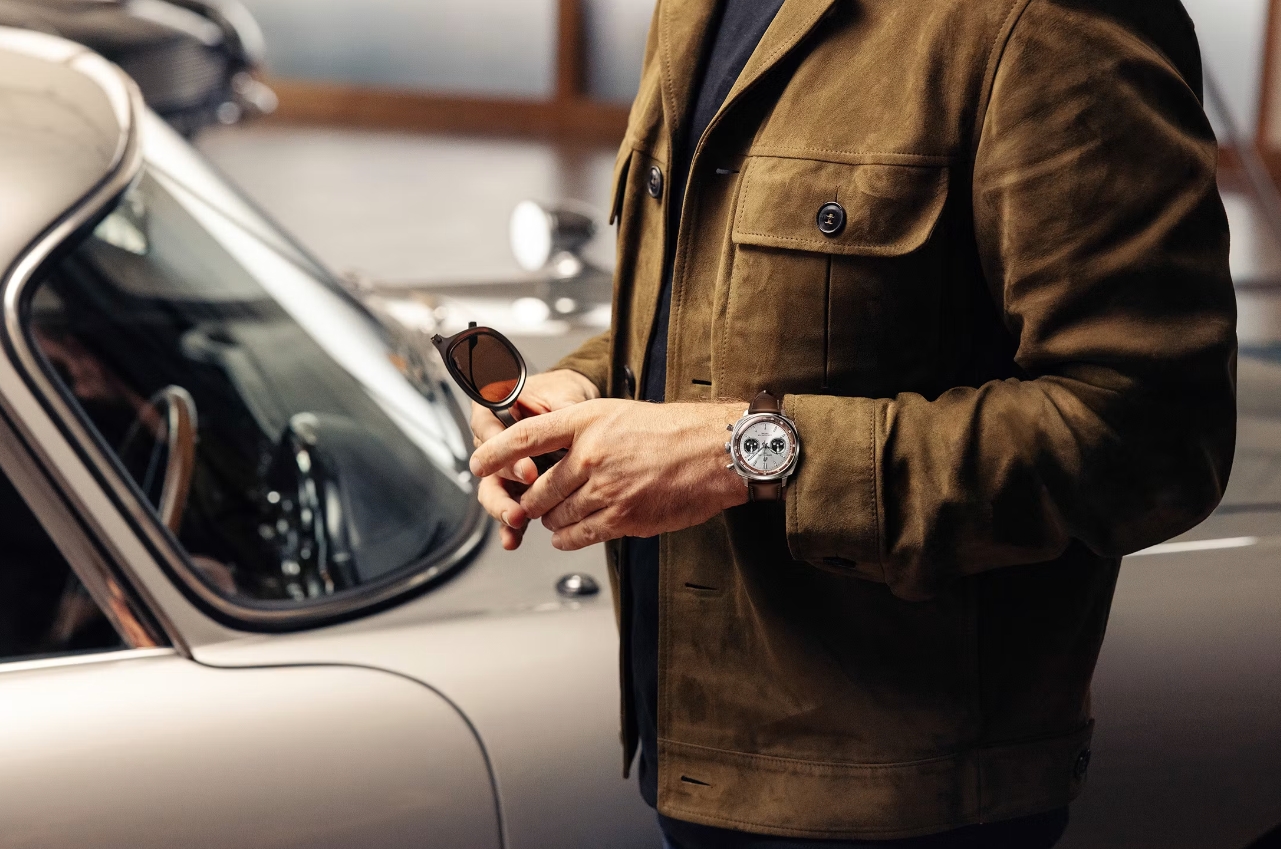
Of the three, the stainless-steel model is the one I find easiest to like.
It has the clearest visual relationship with the DB5 without becoming too literal. Silver, black, brown leather and wood already belong naturally together, so the watch does not need much explanation when it is on the wrist.
The platinum-bezel version is more unusual and arguably more sophisticated, although much of its extra material value is subtle. The red-gold watch is the most dramatic, but at that point the Top Time becomes a very different proposition from the accessible sports chronograph that established the name decades ago.
None of that makes the gold version less interesting. It simply changes the audience.
Reference Details at a Glance
AB0178121G1X1: stainless-steel case, silver-toned dial, wooden inner bezel, limited to 1,022 pieces.
PB0178121B1X1: stainless-steel case with platinum bezel, black lacquered dial, wooden inner bezel, limited to 315 pieces.
RB0178131B1X1: 18K red-gold case, onyx dial, wooden inner bezel, limited to 250 pieces.
The collection uses the Breitling Manufacture Caliber 01 automatic chronograph movement with approximately 70 hours of power reserve, and the watches are rated to 100 metres of water resistance.
Final Thoughts
The easiest way to make a car-themed watch is to borrow a famous badge. Breitling has taken a more interesting route with the Top Time B01 Tribute to Aston Martin DB5.
The strongest references are material rather than graphic: polished metal, dark dial surfaces, leather and especially the wood surrounding the dial. Those choices connect the watch with the atmosphere of a DB5 cabin without turning the piece into automotive memorabilia.
There is also enough difference between the three versions to make each feel intentional. The steel model is sporty and relatively understated, the steel-and-platinum model is darker and more formal, and the red-gold version turns the same idea into a much more extravagant watch.
For collectors and readers studying the Breitling Top Time B01 Tribute to Aston Martin DB5, that distinction is ultimately more interesting than the collaboration logo itself. The watch works because it borrows the character of the car rather than simply borrowing its name.
Editorial note: Atchesselling is an independent publication and is not affiliated with Breitling or Aston Martin. Replica watches are not genuine Breitling products and should not be represented or sold as authentic watches.
About the Author